

Questions for the network contractor before signing the contract
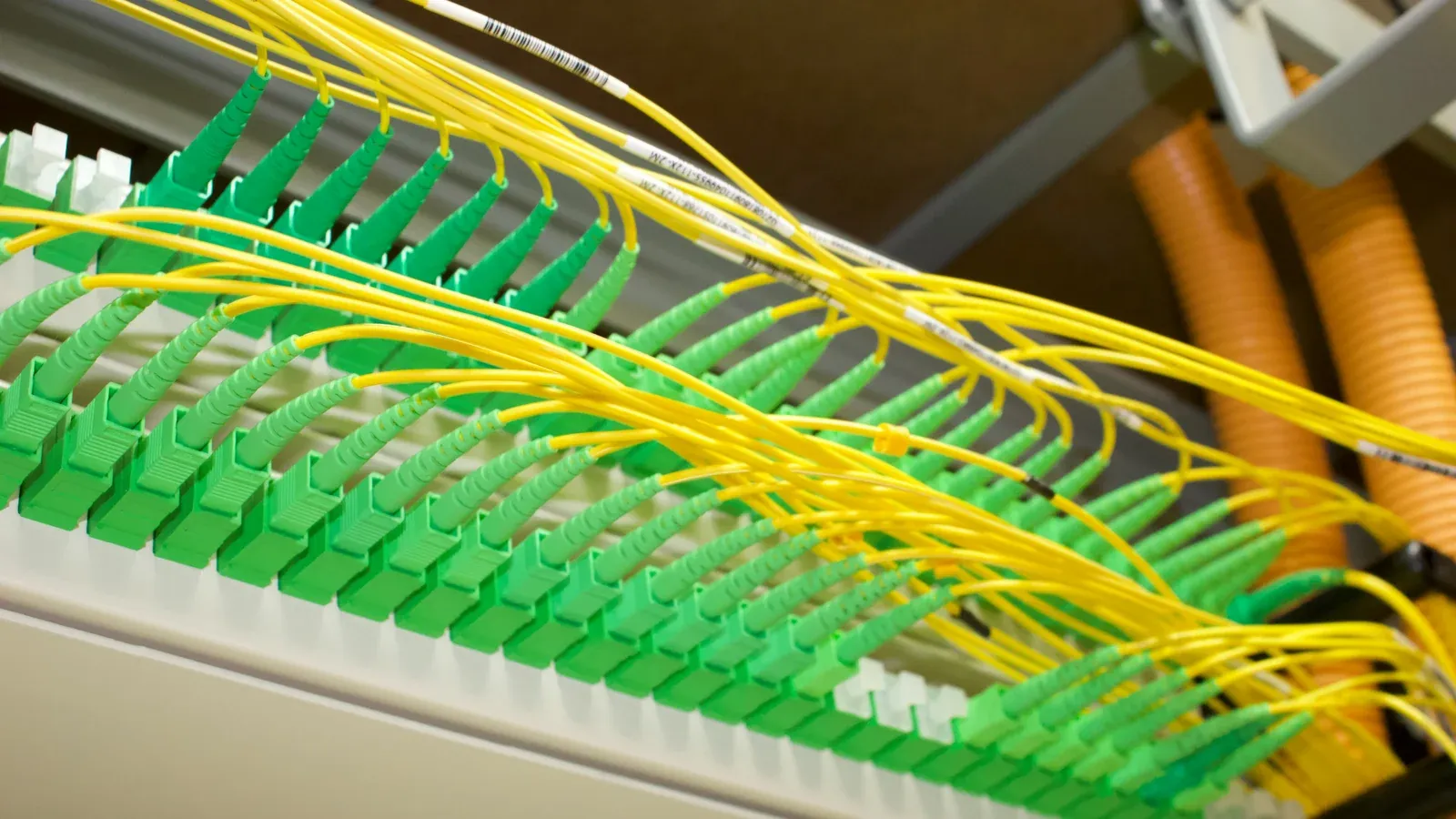
Good questions for the network contractor, asked before the contract, save more than many price negotiations, because they reveal what exactly the order is about. This article collects them in six areas and explains in each one why they should be asked and what should be disturbing in the answer.
Why questions are more important than the offer itself
Two offers for the same network can differ by half the price, and this is almost never due to the margin itself, but to a different range that is not visible until someone asks about it.
A cheaper offer usually does not include as-built documentation, measurements or arrangement of routes, or it assumes that some of the work will be performed by someone else, which means that you have to pay for the omitted activities later, but at a worse time.
The questions below are not a test of the contractor's knowledge, but a way to bring both offers to a comparable level before making a decision.
It is worth remembering that the contractor does not have to answer "yes" to everything, because the honest "we don't do this, it's ordered separately" is better than the seemingly convenient "of course, everything is included in the price".
Scope of work
What exactly is included in the price and what is beyond: ask for a bulleted scope, not a general description, because "network installation" alone does not establish liability.
Who performs drilling, culverts and reconstruction works: is a common gap in which the contractor lays a cable, but leaves the grouting and painting to the investor, informing him only after the fact.
Does the price include equipment or only labour: if the offer includes devices, check whether it indicates specific models or only a category, because "24-port switch" may mean equipment that differs several times in price and capabilities.
What happens when something more needs to be done during the work: ask if there is an established procedure specifying the person accepting, the required form of consent and the rate at which the work will be settled.
What you don't do: is the most valuable question in this section, because a contractor who cannot indicate the boundary of his scope has either not thought it through, or will agree and subcontract something that he does not control.
Documentation and acceptance
What will I get on paper after the work is completed: the expected minimum includes a diagram, a plan with the location of points, their list with markings, test results, a list of devices with serial numbers and a description of the configuration.
Will each track be tested and will I get the result for each separately: the cumulative "tested" is not a result that identifies the affected section.
Continuity test or certification measurement: are two different services that differ in price because the continuity test checks the correctness of the track connection, while the certification measurement verifies the transmission parameters against the cabling category. By determining the scope before the contract, you avoid subsequent corrections to the finished installation.
Will the sockets and panel be physically marked: the description in the table will not suffice if there are no corresponding labels in place.
In what form will I receive the documentation: should be editable or updateable, because a scan of the printout after a year may be misleading.
We describe it in detail in the article about network acceptance protocol and as-built documentation.
Access and configuration ownership
This is the section that is most often skipped, although the consequences of this omission hurt the most later.
Who will own the administrative accounts: the response must identify the company and not merely promise that "you will get access", because the organisation in the panel should belong to the ordering party.
Will I get full permissions or limited: an account with preview rights does not allow administration, so check the scope of rights upon receipt, in the presence of the contractor.
Will your accounts be active after the work is completed: this may be justified if the contractor is to continue servicing the network, but access must be public, described and retrievable by the company.
Will default passwords be changed and where will they be saved: also determine who, apart from one person, will have access to them, so that the company does not become dependent on a single employee.
What happens if we end our cooperation: the question sounds awkward, and that's why it's good, because the way they react to it can tell you more than the answer itself. We develop the topic in the article about changing the IT company and taking over the administration.
Devices and Platform
Why choose this equipment: a good answer refers to the facility and requirements, while a poor answer only indicates the contractor's habit or what he has in stock.
Does the platform require recurring fees and for what exactly: licensing models can be complex because some features may be free, some related to the device licence, and some related to the number of administrators or the length of event history storage. Ask for a specific description, not a blanket assurance that "basic features are free."
What will stop working if I don't renew my licence: determine whether the consequence will be a network outage or just a loss of some management functionality.
Will the new hardware work with what I already have: the question is particularly important during phased modernisation, during which old and new elements operate in parallel.
Is it possible to expand it without replacing the whole thing: It is worth asking about the second branch even if you are not planning it, to learn about the limitations of the adopted architecture.
Liability and Terms
What is the warranty, separately for hardware and separately for labour: these are usually two different periods and two entities that are responsible for different elements.
What does the workmanship warranty cover: specify whether it covers only workmanship defects or also the removal of their effects.
How to report a fault during the warranty period and how long will it take for someone to respond: if a time declaration is made, ask for it to be included in the contract.
Is response time a repair time: no, because the response is the moment someone starts working on the ticket, while the fix happens only when the problem goes away. Mixing these concepts is common, so it is worth separating them in the contract.
Who is responsible for damage resulting from the work: also check whether the contractor has liability insurance that corresponds to the scope of the job.
Who does the work (your people or subcontractors): subcontracting in itself is not a problem, but the lack of information about it should prompt clarification of responsibilities.
Schedule
How long will it take and what does it depend on: an answer of "two weeks" given without asking about the facility is a warning because the deadline depends on the scope of cable work, documentation, service windows and equipment availability.
When will the company be unable to work and for how long: when modernising an existing network, this is a key question that we develop in the article about modernise your network without downtime.
What happens if something doesn't work after switching: check if there is a rollback plan and who makes the decision to use it.
When to order equipment: delivery times may be longer than the work itself, so they should be included in the schedule.
What not to expect at this stage
To prevent your list of questions from turning into an interrogation, it's worth remembering reasonable limits of expectations:
- exact price without viewing the facility. Remote valuation of a large scope is an estimate and should be called as such,
- project as a gift. A reliable project is work. The contractor may include its cost towards the implementation, but will rarely do it for free before the contract,
- guarantee that nothing will happen. Something always comes out in an active facility. It is important whether there is a procedure
- answers to everything right away. Some questions require proofreading, and that's okay.
Questions for the network contractor: short checklist
To print before the interview:
- Bulleted range with explicit exclusions.
- Who does drilling and reconstruction work.
- Additional work approval mode.
- List of documents transferred after receipt.
- Continuity test or certification measurement.
- Physical markings on sockets and panel.
- The company owns the administrative accounts.
- What remains active on the contractor's side and why.
- Platform licensing model and non-renewal consequences.
- Warranty: equipment, labour, reporting mode.
- Response time recorded separately from repair time.
- Service windows and return plan.
- Who physically performs the work.
- What happens when the cooperation ends.
How do we answer this?
When comparing contractors, it's worth asking everyone these questions, including us, which is why we answer them up front.
The scope is given in points, with explicit exclusions, and after acceptance, we provide as-built documentation and full administrative rights to the company, not working access on our account. By separating response time from repair time, we write both terms in the contract and also indicate what we do not do.
After implementation, the network can remain entirely on your side or under our constant care, including monitoring, updates in agreed windows, handling requests and maintaining documentation in a state consistent with reality, because this is a choice, not a condition of receipt.
In corporate networks, we are a Zyxel Networks Partner and we also implement Ubiquiti UniFi, and we select the platform according to the facility and who will operate the network.
Scope: building and maintaining corporate networks. If you are comparing not an implementation contractor, but a supplier of permanent IT services, the right material is an article about how to choose a company for IT services.
Book a free IT review And ask us these questions while we're talking.